Terroir & Memory: The Vanishing Wine Cellars of Georgia
An ancient symbiosis of clay, yeast, and hospitality surviving along the foothills of the Caucasus.
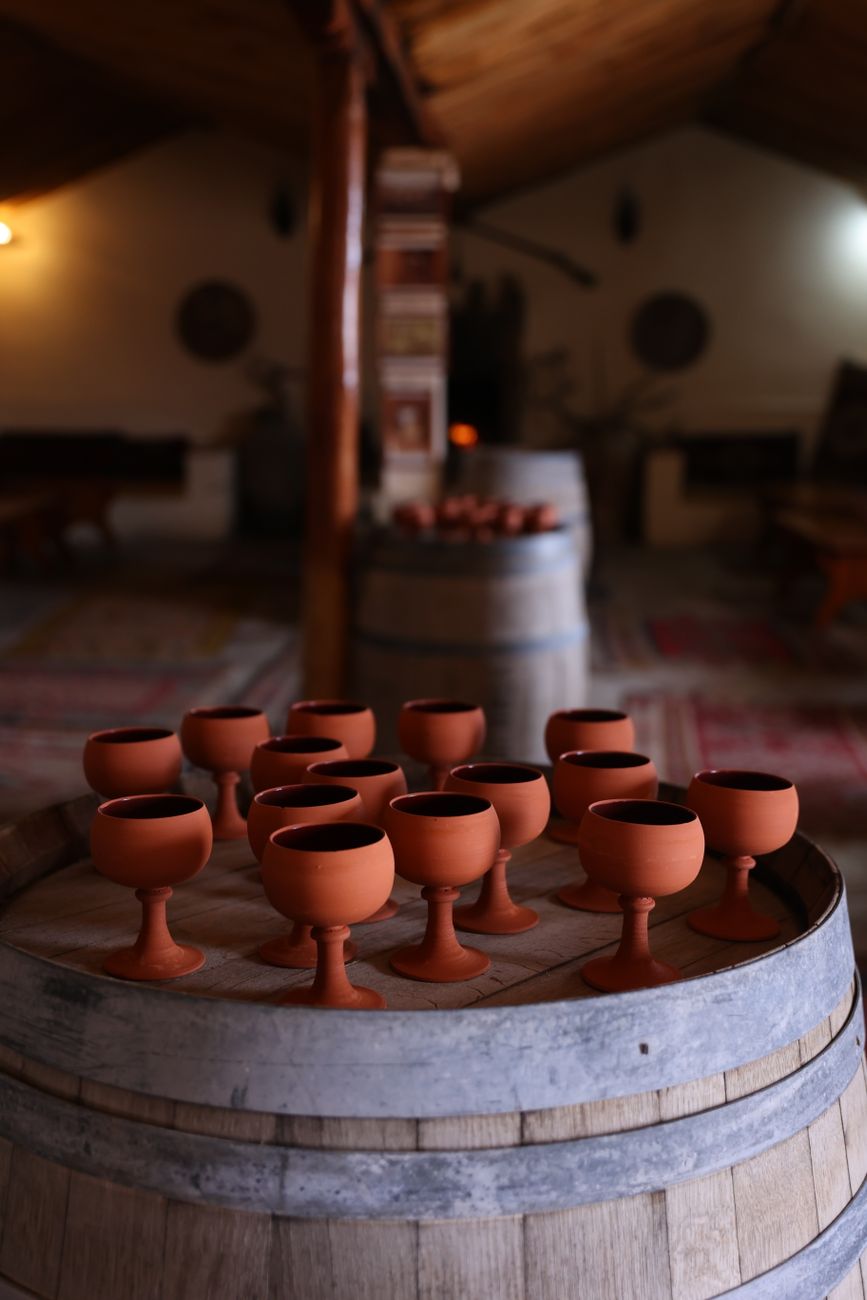
"Wine in Kakheti is not viewed as an indulgence or an export commodity. It is referred to simply as the blood of the earth, an essential medium for spoken poetry and table kinship."
Eight Millennia of Buried Clay
Long before oak barrels became standard practice in Western Europe, winemakers in the valleys between the Black and Caspian Seas lowered massive pointed vessels called qvevri into the damp earth. Sealed with beeswax and packed with natural clay, these subterranean amphorae maintain an ideal, stable fermentation temperature without electricity or synthetic intervention.
Walking into a marani (traditional cellar) in Sighnaghi feels like entering a cathedral. The earthen floor reveals only stone rims flush with the clay. Beneath your feet, whole clusters of Rkatsiteli or Saperavi grapes undergo months of skin contact, producing amber wines with tannic structure unlike anything found on supermarket shelves.
The Ethos of the Supra
No study of Georgian wine can decouple liquid from ritual. The traditional supra, presided over by a chosen tamada (toastmaster), transforms meals into structured philosophical exchanges.
- Indigenous yeasts: No sulfur additions or artificial clearing agents; gravity alone pulls sediments into the conical base of the qvevri.
- Walnut and pomegranate: Slow stews seasoned with wild herbs gathered from the high mountain passes accompany the long afternoon toasts.
- Generational memory: Vineyards replanted after twentieth-century industrialization honoring wild, resilient native varietals.
To travel through Georgia with 111111 is to slow down to the pace of natural decantation, honoring cultures where food remains sacred communion.